Appliances Icon Set 7: Graphics & Icons for Commercial Design
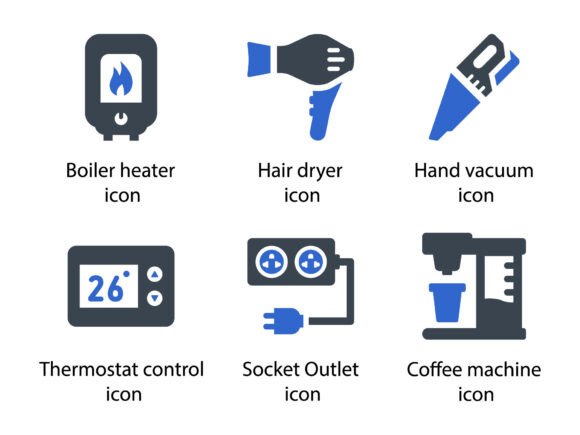
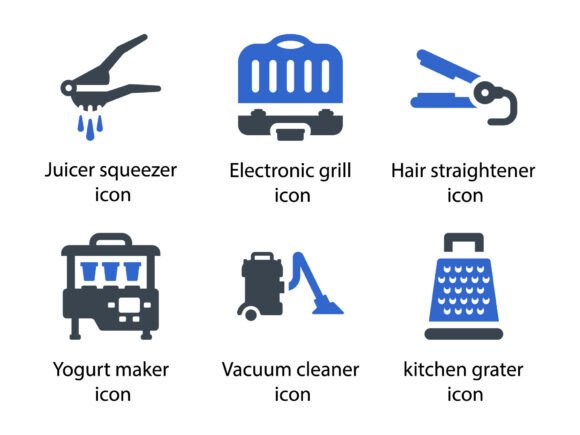
As a digital product creator who’s launched over 200 Etsy listings—and scaled three Canva template shops—I opened Appliances Icon Set 7 expecting utility, not flair. What I found was something more valuable: quiet consistency. These aren’t loud, trend-chasing icons. They’re Beautiful meticulously designed Glyph Icons—clean, balanced, and built for real-world use across websites, presentations, printables, infographics, and promotional visuals.
The first impression? Calm professionalism with subtle warmth. The line weight is even, the corners are softly rounded—not too geometric, not too organic—and the spacing between negative and positive space feels intentional. This set leans modern-minimal but avoids sterility. It reads as trustworthy to small business owners, approachable to crafters, and versatile enough for seasonal bundles (think spring cleaning kits, kitchen renovation planners, or home maintenance checklists). It won’t attract buyers looking for cartoonish charm or vintage grit—but it will resonate strongly with clients seeking polished, scalable graphic design assets for functional or lifestyle-oriented products.
In my current shop prep—a new line of printable home management kits for Etsy and Creative Fabrica—I tested Appliances Icon Set 7 across six high-potential formats:
- SVG designs for Cricut users: All icons imported cleanly into Design Space; no stray anchor points, no overlapping paths. Cut lines held up at 1.5” and 4” sizes—ideal for planner stickers and iron-on transfers.
- PNG designs with transparent backgrounds: Crisp at 300 DPI, no haloing or anti-aliasing artifacts. Perfect for mug mockups, tumbler wraps, and social media graphics where layering matters.
- Clipart bundles: Grouped logically (kitchen, laundry, HVAC), making it easy to build themed collections like “Home Renovation Toolkit” or “Rental Property Checklist Pack.”
- Sublimation designs: Tested on white ceramic mugs and polyester tote bags—colors stayed true, edges remained sharp, and the glyph style translated well to fabric texture without losing legibility.
- Canva templates: Paired effortlessly with both sans serif (Inter, Montserrat) and soft script fonts (Quicksand, Pacifico). The icons supported visual hierarchy without competing with body text.
- Printable wall art: Used in a minimalist “Kitchen Command Center” poster—scaled cleanly to 11x14”, retained clarity even when printed on matte cardstock.
Where Appliances Icon Set 7 strengthens product presentation is rarely obvious at first glance—but always measurable. In marketplace thumbnails, its consistent stroke width and open shapes increase scan speed. On listing images, it adds quiet authority—no busy details to distract from your value proposition. When bundled into a design bundle (e.g., “Home Services Brand Kit”), it supports brand identity without demanding attention. And because each icon works equally well on light or dark backgrounds, it boosts perceived value—customers trust that they won’t need to edit before using.
This set shines brightest in contexts where clarity and cohesion matter most: large-format product mockups, themed digital downloads, decorative layouts for printable planners, merchandise graphics for print-on-demand, and clean social media promos for contractors or home organizers. It also elevates packaging design—I used the refrigerator icon on a sticker sheet for a client’s eco-friendly appliance cleaner line, and it subtly reinforced premium positioning.
That said, proceed with awareness in these scenarios:
- Tiny sticker details: Avoid scaling below 0.75”—some finer glyphs (like the dishwasher’s interior grid) lose definition.
- Overly complex layouts: Don’t crowd these icons with dense patterns or textured overlays—their strength is simplicity.
- Low-resolution print products: Not ideal for newsprint or thermal paper; stick to coated stocks or digital displays.
- Crowded thumbnails: On Etsy or Creative Fabrica, pair with ample whitespace—don’t try to fit five icons into one 400x400px preview.
- Dark backgrounds with weak contrast: Test against charcoal or navy—some lighter strokes may need a 5% stroke boost for legibility.
- Text-heavy templates: Use sparingly in dense blog graphics or multi-step instructions—let them punctuate, not populate.
Before publishing any Etsy product, print-on-demand item, or digital download, I run these quick seller checks:
- Preview the full set in a real product mockup—not just a flat PNG, but on a mug, tumbler, and printable PDF layout.
- Zoom out to thumbnail size (400x400px) and ask: Does the icon still read as *appliance*, not just *shape*?
- Test on both white and dark backgrounds—verify transparency in PNGs and stroke visibility in SVGs.
- Print a test sheet on your target paper stock—check color fidelity and edge sharpness.
- Import SVGs into Cricut Design Space *and* Silhouette Studio—confirm cut quality, especially on nested elements like oven dials or microwave buttons.
- Organize files clearly for customers: separate folders for SVG, PNG (2000px), and web-ready PNG (800px); name files descriptively (e.g., “oven-icon-silhouette.svg”).
- Confirm commercial licensing covers end-use—yes, this set includes a broad commercial license, but always re-read terms for resale restrictions.
Finally, consider pairing strategy. These icons breathe best beside restrained typography: a crisp sans serif for tech-forward brands, a warm serif for handmade business credibility, or a gentle script for lifestyle niches like home staging or interior coaching. Avoid overly decorative display fonts—they dilute the icon’s calm authority.
If you sell digital products tied to home, maintenance, organization, or small business services—or if you create printable designs, sublimation designs, or t-shirt designs for DIY audiences—Appliances Icon Set 7 isn’t flashy. But it’s reliable, production-ready, and quietly professional. That’s the kind of design asset that builds repeat customers, supports cohesive small business branding, and turns functional listings into trusted resources in crowded creative marketplaces.