Lab Science Icon Set 2: A Designer’s Real-World Embroidery Review
First Impressions: Clean, Calm, and Quietly Confident
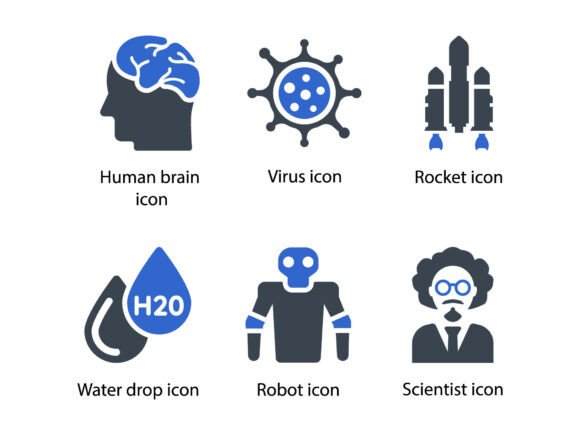
Opening Lab Science Icon Set 2 feels like stepping into a well-organized lab notebook—no flashy gradients or forced whimsy, just precise lines, balanced negative space, and thoughtful proportion. These aren’t cartoonish beakers or exaggerated DNA spirals. They’re glyphs: minimalist yet unmistakably scientific—test tubes with subtle meniscus curves, petri dishes with clean inner rings, molecular bonds drawn with quiet accuracy. The mood is calm authority—not clinical coldness, but approachable intelligence. That makes them ideal for embroidery projects where you want to signal curiosity, care, or quiet expertise: baby onesies for pediatricians’ kids, aprons for science-themed bakeries, tote bags for university bookstores, or pillow covers for a STEM educator’s nursery.
How It Stitches: Clarity Over Complexity
I tested Lab Science Icon Set 2 on a custom embroidered cotton tote bag for a local science camp—lightweight canvas, medium-stretch stabilizer, standard 40-weight rayon thread. The icons held up beautifully. Because they rely on strong silhouettes and avoid micro-detail (no tiny labels, no nested linework), they translated cleanly from screen to stitch. Satin stitch edges stayed crisp; fill stitch areas remained breathable without overloading the fabric. Unlike busier icon sets that turn muddy at 2.5" wide, these icons retained legibility even scaled down to 1.75" on a child’s sweatshirt cuff.
They also behave well across varied applications: a single test tube icon works as a subtle chest emblem on a teacher’s polo; three aligned icons (microscope, flask, atom) make a cohesive sleeve motif on a lab coat-inspired apron; and the petri dish glyph reads clearly as an embroidered patch on twill-backed denim.
Where It Shines—and Where to Pause
Lab Science Icon Set 2 excels in contexts where restraint builds trust. Think personalized gifts: a baby’s first “DNA strand” stitched on a muslin swaddle (soft, low-density fill stitch), or a holiday tea towel for a pharmacist featuring a single elegant pipette icon. Small shop owners will appreciate how cleanly it scales for printable mockups—whether you're listing on Etsy or prepping for a craft fair booth. As digital embroidery files, they’re versatile assets: use them solo for minimalist branding, layer them subtly behind a shop name in a satin-stitched logo, or pair with a short phrase (“Observe. Question. Create.”) for boutique packaging.
That said—pause before stitching onto highly textured fabrics like bouclé or thick terry cloth. Fine outer contours can blur. On stretchy knits (think youth tees or raglan sleeves), always test with light cutaway stabilizer: the clean geometry needs support to stay true. And while the icons hold up on dark fabric, avoid pairing them with low-contrast thread—e.g., navy thread on black fabric. These glyphs depend on edge definition, not tonal blending.
What Works Well
- Custom apparel: Crisp on cotton, linen, and midweight blends—ideal for sweatshirt embroidery, tote bag design, and baby embroidery.
- Holiday & gift embroidery: Timeless enough for year-round use; pairs naturally with neutral thread palettes (cream, charcoal, sage).
- Commercial embroidery: Scalable, licensable, and brand-safe—no copyright traps or overly stylized elements that date quickly.
- Digital product sellers: Clean vectors translate reliably to embroidery file prep, printable mockups, and SVG-based design assets.
Use With Intention
Don’t force Lab Science Icon Set 2 into roles it wasn’t designed for. It’s not an applique design—there’s no layered fabric suggestion or shadowing. It’s not meant for dense decorative accents like mandalas or florals. Avoid placing it directly over seams or curved surfaces (like cap fronts) unless you’ve confirmed hoop size compatibility and adjusted underlay. Tiny lettering isn’t part of this set, so don’t expect lab abbreviations or chemical formulas built in. And if your project demands high stitch density for texture or sheen, look elsewhere—this set prioritizes clarity, not flash.
Design Impact: Why Simplicity Builds Value
In handmade product markets, perceived professionalism starts with visual coherence—and Lab Science Icon Set 2 delivers that quietly. Customers notice when an icon looks *intentional*, not generic. A science-themed Etsy seller told me her repeat buyers specifically mention how “calm” and “thoughtful” her embroidered patches feel—directly tied to using restrained, well-proportioned icons like these. That translates to higher perceived value, better photo appeal (especially on white or oat-colored backgrounds), and stronger brand consistency across products—from embroidered pillow covers to digital product previews.
It also supports giftability. A stitched petri dish on a linen kitchen towel doesn’t scream “science class”—it whispers “curiosity, care, precision.” That subtlety resonates with adults buying for teachers, new parents, or colleagues. It avoids cliché while still landing the theme.
Practical Notes Every Embroidery Designer Should Check
Before cutting fabric or sending to production:
- Test Lab Science Icon Set 2 on scrap fabric matching your final project’s weight and weave.
- Review stitch density—especially in circular elements—to avoid puckering on lightweight cotton or baby knits.
- Confirm hoop size requirements; some icons may need a 4x4" minimum for optimal spacing.
- Inspect small details at actual stitch-out size—zoom in on corners and curve junctions.
- Mock up in black and white first to assess contrast and balance without color distraction.
- Compare performance on light vs. dark fabric backgrounds—adjust thread colors accordingly.
- Choose stabilizer based on fabric behavior, not just habit: cutaway for knits, tear-away for stable wovens.
- Verify licensing terms—especially if selling finished products or bundling as part of a commercial embroidery project.
Lab Science Icon Set 2 won’t wow with novelty—but it earns trust through consistency, clarity, and quiet intention. For embroidery designers, craft business owners, and creative entrepreneurs who value real-world performance over pixel-perfect hype, it’s a reliable, adaptable, and genuinely useful addition to the design toolkit.